

The first angel sounded his trumpet, and there came hail and fire mixed with blood, and it was hurled down upon the earth. A third of the earth was burned up, a third of the trees were burned up, and all the green grass was burned up. (Revelation 8:7, NIV 1984).
My Musings – This judgment closely follows the judgments on Egypt (Exodus 9:22–25). However, John’s vision adds blood to the hail and fire of the Exodus narrative. See also Ezekiel 38:22. The Prophet Joel also prophesied “blood and fire” in the last days (Joel 2:30, NIV 1984). If this is a direct supernatural judgment from God, it is not necessary to try to explain how hail, fire, and blood become mingled. Fire could refer to the lightning of a severe electrical storm, albeit on a scale never experienced before. If it is John trying to describe 21st century warfare (thermonuclear exchange raining down, blood from the carnage and the devastating effects of the heat, fallout and radiation) the mingling of “hail,” fire, and blood is also easy to visualize.
The language does seem to indicate, however, that this is a direct object of divine wrath (but could also refer to nuclear missiles). The same language is also used of the fiery coals later on. “The angel took the censer, filled it with fire from the altar, and hurled it on the earth; and there came peals of thunder, rumblings, flashes of lightning and an earthquake.” (Revelation 8:5, NIV 1984).
A Third of The Earth, Trees, and Green Grass Were Burned Up – There are three principal views on this judgment.
- Specific Region – The first view sees the 1/3rd of the earth’s surface as a specific locale (like the judgments on Egypt), which comprises 1/3rd of the total earth’s land mass, but is not 1/3rd of all the earth.
- Revived Roman Empire – The second view holds that the 1/3rd refers only to the area covered by the “revived” Roman Empire, ruled over by the anti-Christ.
- Global – The third view sees this judgment affecting 1/3rd of all the earth’s land masses.
All the grass likely includes of all vegetation, as in the Exodus account, which states “all the plants of the field” were affected. It is easy to see how “grasses” would suffer greater harm than trees due to their more fragile structure and shallower root structure. In the Bible, trees are often used to symbolize the pride on man, while grass is used to symbolize the frailty of man.
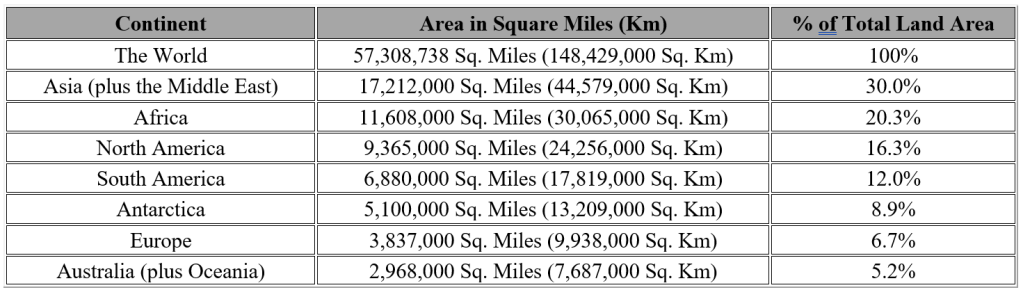
The target of this judgment is green vegetation (the trees and the grass), 1/3rd of which is burned up. One can well imagine how this would affect not only the balance of nature, but also the entire world’s food supply, with the indirect impact on meat, poultry, egg and milk production. It is difficult to comprehend destruction of this magnitude, but the following may help put such devastation into perspective.
My Advice – There is much we take for granted, and much that we complain about. But we’ve never seen anything like what is described here. We need to appreciate more what we have, and complain less about the things we do not.
Resources:
Barry, J. D., Heiser, M. S., Custis, M., Mangum, D., & Whitehead, M. M. (2012). Faithlife Study Bible (Re 8:7). Bellingham, WA: Logos Bible Software.
Wiersbe, W. W. (1996). The Bible exposition commentary (Vol. 2, p. 593). Wheaton, IL: Victor Books.
Wiersbe, W. W. (1992). Wiersbe’s expository outlines on the New Testament (p. 819). Wheaton, IL: Victor Books.
http://www.enchantedlearning.com/geography/continents/Land.shtml

 The Brew Is A Musing
I agree about being appreciative and positive about our abundance and the multitude of choices we can make. Negativity sucks the joy out of life and doesn’t show gratitude.
LikeLiked by 1 person
Thanks for commenting, Nancy. God bless!
LikeLike